Showing posts with label Crystal Picking. Show all posts

Wednesday, 12 June 2019

Making Bismuth Crystals At Home

Bismuth from Magnametals on Ebay

I bought a piece of Bismuth on Ebay after watching an online tutorial so I am now officially an expert at this... Joking. I just like smashing things up with my hammer... But the multi-coloured, pyramid-like crystals formed by Bismuth when it cools down were just too much of a lure to ignore


The Bismuth I bought was 99.99% pure; I'm not sure what that means but I suspect it is the same as bleach. Since microscopes can't see the smallest bacteria the bleach adverts aren't allowed to say that they are 100% effective, so they always say they "kill 99.99% of all bacteria." instead. From what I have read though impurities will float to the surface once the cooling process begins. You can skim it like you skim the fat off a chicken stock...

I am getting off topic. As you can see the Bismuth is very pretty in the form it arrived in. I figured that it would be easier to melt down if it was in smaller pieces. For this, you should use safety goggles. If you don't have any then wrap the metal in a towel before you attack it with the hammer. This will mean you're less likely to get anything in your eyes or flying off to hit you. Once You have smashed it into pieces you can put it straight into the pot. Make sure it is an old pot because once you have melted metal in it you won't be able to get it clean ever, ever again.


So the process should go something like this:
  • You melt the Bismuth in a pan. I found out there is actually no need to smash it after all, since the bigger bits all melted easily.
  • You can melt the Bismuth on a normal cooker, since it has a melting point of 271 degrees C (ish). 
  • You take the pan off the heat once the metal has become molten.
  • As it cools the metal will form into pretty crystals that form in all different colours.
  • The colour of the metal will change depending on what temperature the cooling liquid comes into contact with the air. This is why we get a rainbow of colours from Bismuth crystals. 
  • This is one of the many YouTube videos I watched before I started... helpful, but proof that not all things can be mastered by watching an instructional video...
I made several mistakes. Firstly, I didn't remove the slag quickly enough. I still haven't got the hang of this. The slag cools exceptionally quickly and you have to move fast once you take the Bismuth off the heat. The unique blend of colours are created through the oxidization process and this is part of the reason that you should cool it as slowly as you can. The greater array of temperatures you cool it at will make for a greater scope of colour. I got stuck with blue, green and purple... but I'm not complaining!

I took a short video just to let you see what the Bismuth looks like when melted... it's pretty fascinating stuff.


My next mistake was not letting it cool slowly enough so that you can catch the colours. I did see one video with the Bismuth pan wrapped in insulation which did seem to slow the cooling process.I also didn't move the crystals that had newly formed around with a fork. If you don't keep the top and bottom layer separate you will end up with a solid block of metal as the crystals join up... unfortunately when you only have a hundred grams of a metal it's not enough for layers. You can see from the video how little it actually is to work with.

All this being said I'm not about to gice up just yet. Next time I will buy a bigger quantity of Bismuth and I guess about a half kilo would be enough to make layers. As you can see from the end result I need a lot of practise at this. I think it would be worth it to investigate further though, as soon as I find the time.

I added a close up below so you can see the beginnings of the crystal formation. This is one project I hope to get much better at over time.


In terms of trickiness I'd give it a seven out of ten. In terms of crystal formation I give myself a two out of ten... however, I would do it again (and probably will) just for the fun of it.

Thursday, 14 February 2019

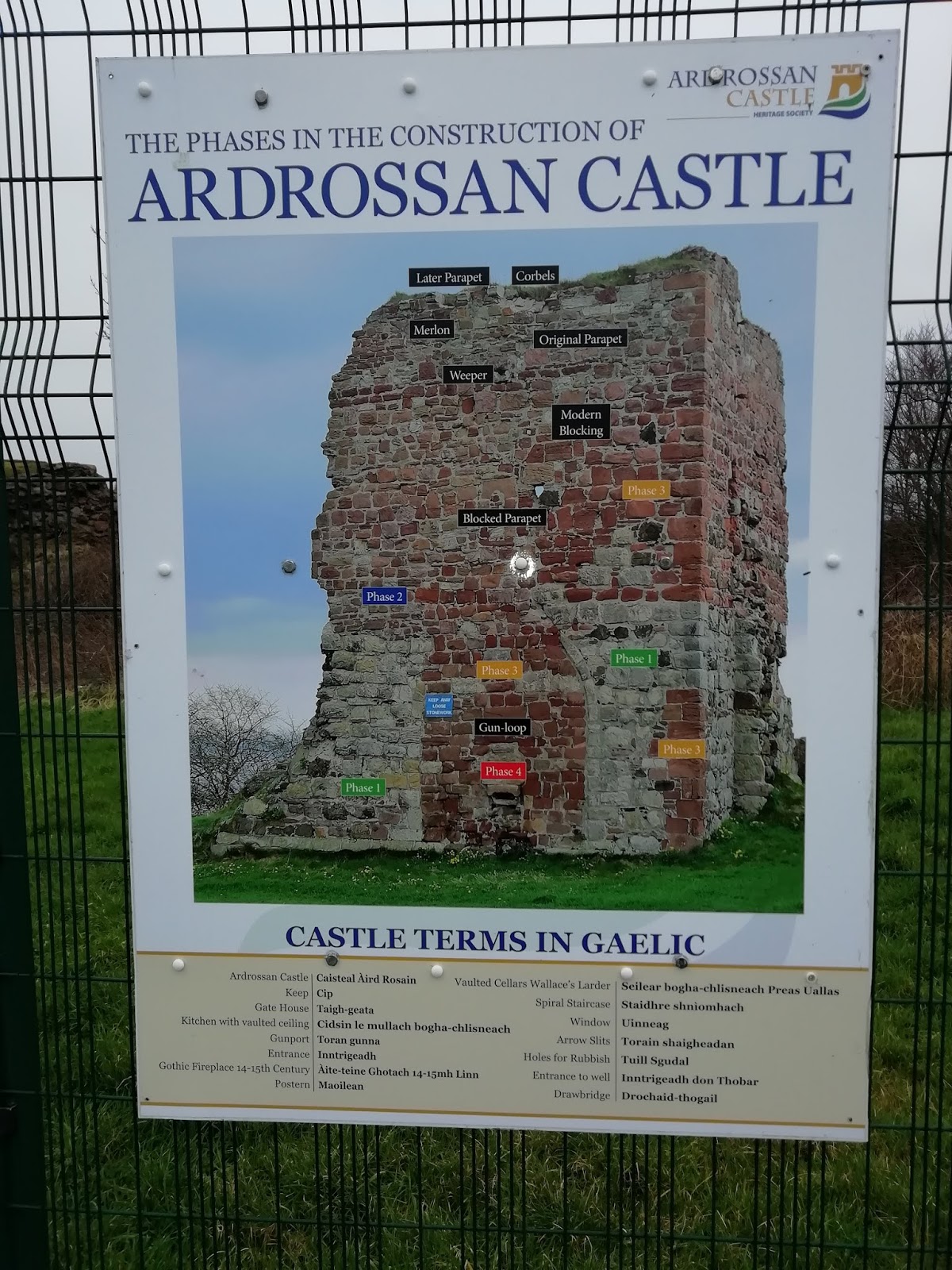
Ardrossan Castle...is it Haunted?


Ardrossan Castle: I had to stick my hand through the bars in the fence to get a good shot.

I know posts have been a little slow so far this year. I've had a few health issues that have kept me indoors. I've resolved to take better care of myself because i get severe cabin fever. So instead of my planned trip gold panning this week I took the physically easier option of going on a mini road-trip.

I headed west for a change, sick of not finding the Elie Bay Rubies I've been out three times to look for. I decided instead of doing anything strenuous I would find something creepy to go look at - and that's how I ended up at Ardrossan Castle.

Ardrossan Castle sits on Canon Hill; a ridge above the town itself. Visible from the bay at Saltcoats (a popular tourist town) it was first constructed in the 12th century. It was partially destroyed after the Scottish Wars of Independence and then it was rebuilt by the Clan Montgomery in the 15th century - only for Oliver Cromwell and his cronies to come along a couple of hundred years later and steal all the masonry to build the Ayr Citadel. The less said about this historical fiasco the better.

What interested me in this tourist spot was not the history - but the legends! In my constant quest to find spooky locations I came across a story about William Wallace wandering the ruins on stormy nights. Now I have lived in both Ayr and Lanark: two very creepy towns both associated with Wallace. So it peaked my interest. There is a second legend regarding a famed horseman known as Sir Fergus Barclay. Nicknamed the De'il o' Ardrossan, this man reportedly traded his soul with the devil in order to be a better horseman. The Devil gifted him a magical bridle which allowed him to become famous - but Barclay later tricked the devil into giving back his soul. In anger the devil attacked his castle, leaving his hoof prints embedded in the very stones themselves.

As well as the lovely view and the castle (which is now all sealed off from the public because it is in ruins, although you can walk around the fence) there is a monument up there. This was erected to Alexander MacFadzean (pronounced Mac-Fad-Yin) in the 19th century. Dr MacFadzean contributed to turning the town into a Burgh, helped install a police station, contributed to the gas, water and electricity supply outside of town and was a general all-round good guy. A monument seems fitting.

Alas I saw no hoof prints, saw no ghosts, and the spectacular view from whence I should have been able to see Arran, the Ailsa Craig and other stunning craggy mountains actually looked like the photo on the right there because it was windy and miserable. I'm sure it's stunning on a nice day!

So After a look around and a bit of a climb I got back in my car and headed down the coast to Dunure... which also has a castle and which deserves it's own page. Until next time; happy crystal hunting, Scotland loving and writing... you are a truly diverse bunch!


Friday, 11 January 2019

Scottish Jasper (and my failure to find it)

So it turns out that minerals in Scotland are a lot more popular than I thought they would be. For this reason I have been toying with the idea of starting a separate blog entirely for my writing work. I had wanted to do it the other way around since this is the 'Katriona Writes' page but there are too many established readers now to change it up. So any good titles you have for a writing page in the comments please!

This Monday I went on a wet and windy quest into the Campsie Fells in an effort to find Jasper. Apparently it is one of the most abundant minerals in the area but that didn't help me any in terms of identification. I went armed only with the knowledge that you have to chip it out of rock and that it is red, yellow, blue and green.

Yeah the sign says it all...
What makes Scottish Jasper so special is that it comes in mixed patterns of red and yellow. Anywhere else in the world it comes out of the rock as either one or the other; but ins Scotland it can be streaked or spotted with both colours. Once again I was left in awe of this country's ability to produce world class minerals... if I could find any.

My research showed that the divide in colour of the Jasper is much like the staining I have found on other minerals in both the lower highlands and the southern uplands. A high presence of pyrite and other minerals in the soil leads to all shades of yellow, red, orange and pink minerals which would otherwise be white.

In the photo opposite you can see four minerals. The one on the left is Calcite druse, the other three are all Cairngorm Quartz. As you can see, it might be difficult to identify the chunk on the right and the bottom piece as Cairngorm Quartz simply because of the colour. This deep orange or yellow form is sometimes called a Cairngorm Citrine, so I'm pretty happy to add a few to the collection.

Anyway - back to the Jasper. My research showed up that it can be found throught the Crawford Moors (that's what they used to call the Leadhills/Wanlockhead/Crawford/Crawfordjohn areas back in the day) as well as in the Campsie Fells. It is mentioned in the Scottish Agates Jasper section that of all the recorded other places Jasper is found were 'dry' when the team there went to check.The culmination of this meant that I ended up at the Car Park in the Sky in the Campsies in really terrible weather, armed with a rock hammer and one dog.

Jasper still in the rock, someone already pinched most of it.
There are a number of walks and hikes you can take in this area and, had the weather been better, I would be keen to try them out. As it was I had to make do with reaching the nearest rock faces to the car park and having a gander. Contrary to the title I DID actually find some, and brought a small chip of it from the rock home with me...among another ten potential Jasper samples which I then mixed together...DOH!

Luckily I took a photo to prove it...

Fintry Kirk - something creepy that caught my eye on the way
Kai, dam unknown (I got lost)

So the result is a distinct lack of Scottish Jasper for the moment. I will definitely add it to my list of very interesting minerals though. As you can see from the colour it is fantastic in its natural form.It seems such a shame to chip it away from there.

The conclusion? I don't know if I have the heart for Scottish Jasper... but I have heard that you find Jasper-like Agate in Burn Anne... onwards and upwards, I always say!

(Jan 2023 update - Now that I can spot it I find more jasper than anything else. Check your nearest river, you are bound to find it.)